Case Study: Cactus Corner, Eads
About the development
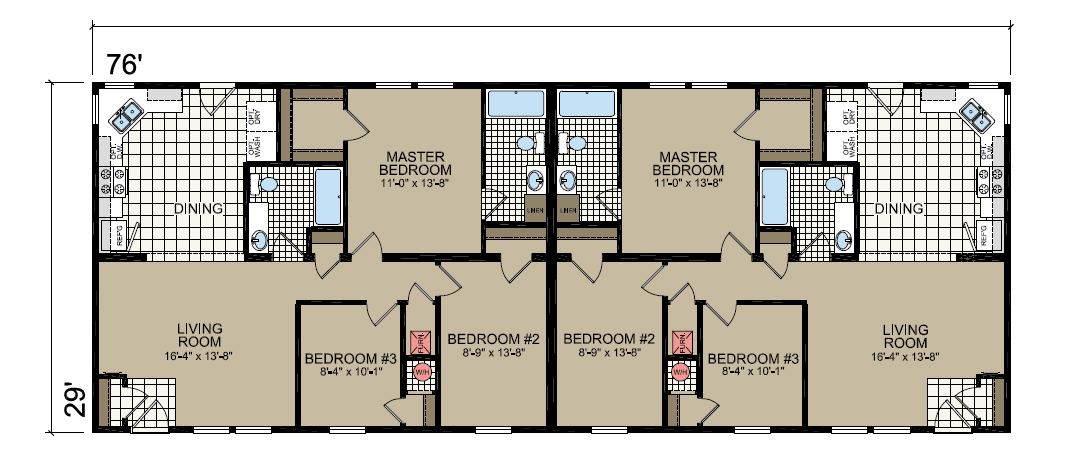
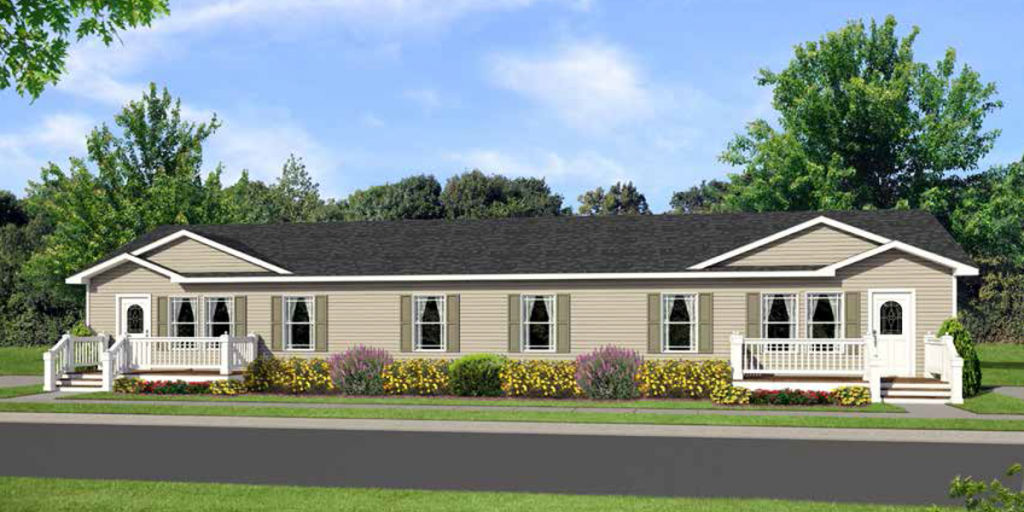
Cactus Corner is a development currently underway in Eads, Colorado. When completed, it will include six duplex rental units that are targeted to be affordable to local workers. The units will provide a much-needed supply of affordable rental housing to the Eads and broader Kiowa County area. This will allow workers to live closer to where they work and avoid the hours-long commutes they currently face. The development is being led by Southeast Colorado Enterprise Development, Inc. (SECED).
Contributors to success in development
Recognized housing needs for renters in the community. This development is a product of Kiowa County having several businesses with workers who commute 60 miles or more. The county approached SECED with the request to develop rental housing to support these workers. In evaluating local housing conditions and talking with renters, SECED found that the small amount of rental housing that does exist in and around Eads often has housing quality challenges. SECED spoke with workers and community stakeholders to explore what better housing options would look like for the community. SECED also partnered with a playground designer to construct a new playground at the site and redesign the playground at the local school to further add value to the local community.
Building staff capacity. SECED is a small organization with a staff of four and did not have prior housing development experience. The development process for Cactus Corner, therefore, represents both a learning opportunity and a major capacity-building challenge for staff. The SECED development lead attended the Colorado Division of Housing’s (DOH) developer trainings prior to beginning development. The state and county also helped SECED to understand the covenants and building codes with which the development would need to comply. CHFA and DOH supported SECED in exploring potential funding options. An experienced project manager from the development’s general contractor was helpful in providing education about the design and construction processes.
Organizational commitment and perseverance. The development benefited from a shared interest from the community and SECED’s board in seeing this project succeed. The encouragement and support for SECED has been a major contributor in helping the organization persevere through the many challenges of the development process.
In-kind support from the partners. The affordability achieved in Cactus Corner was made possible by the in-kind contributions from many public sector and community-based partners. The land for the development was contributed by the Kiowa County Economic Development Foundation (KCEDF), which also helped SECED with development planning. KCEDF also facilitated onsite infrastructure development. The Town of Eads was willing to waive permitting fees to enable greater affordability. Kiowa County volunteered to get the site prepared for development.
Creative financial problem-solving. SECED was able to work with DOH to find a way to repurpose program income from an existing revolving loan fund program to use on this new construction project. SECED was recertified as a community-based development organization, allowing them to access this funding not normally eligible for a new construction project. By ensuring the construction meets energy efficient guidelines, the project was able to utilize these funds that had been sitting idle and will ensure lower utility bills for its residents.
Leveraging local resources for disaster resilience. Kiowa County has covenants related to emergency planning and disasters, including tornadoes and hail. At first, SECED considered adding a storm shelter to the development, which would have added costs. Instead, they were able to identify a nearby assisted living facility with the capacity to provide emergency shelter. This enabled the development to meet local requirements, provide an emergency shelter for future tenants, and save on development costs.
Adapting to the pandemic. Like many developments underway during the COVID-19 pandemic, Cactus Corner was impacted and SECED had to adapt. Requirements that the project utilize local labor combined with the fact that local contractors reported not being available to take on new developments for at least two years meant that SECED struggled to find an available contractor. The pandemic also impacted the development’s construction costs, both through labor shortages and increasing material costs.
Planning for future operation. Although construction is currently underway, SECED already has a strong plan in place for the lease-up and operation of Cactus Corner. The KCEDF will facilitate the prospective tenants’ application intake. Given that KCEDF already has a waiting list for housing opportunities in the area, the challenge will likely be more related to establishing prioritization criteria than attracting interest. SECED will hire local maintenance staff to maintain the development. If successful, SECED may be able to expand the development, given KCEDF ownership of the land directly to the west of the site.
Key lessons for other developers
Use a professional for market studies. For Cactus Corner, SECED opted to conduct its own market study. However, while they did a thorough job of investigating local conditions, they struggled to convince some funders that Cactus Corner was a viable development. Given the opportunity to make this decision again, SECED would have hired a professional market analyst to conduct the study, eliminating the costs of doing the study themselves and creating a more compelling and arms-length case to funders. They are currently pursuing a second development that will utilize a professional analyst in this role.
Hire an experienced general contractor or construction consultant. Given its lack of previous experience with construction, SECED was fortunate to partner with an experienced construction project manager who supported SECED through the many decisions and processes involved in construction. In the absence of this experience and supportive posture, developers new to the construction process would be well-served by hiring an experienced construction professional who can help the organization navigate this complex process.
Incorporate community design preferences early. One lesson from the design phase of the development was that county and town design preferences could have been more efficiently incorporated into the development through greater communication and collaboration, such as through a design charette process.
Be persistent and creative in the face of challenges. There are many challenges created in the development process, from funding restrictions, the global pandemic, contractor availability, and the inevitable learning process involved when a new organization develops housing. It is critical that new developers not be discouraged as barriers are encountered and see these as learning opportunities to incorporate into future developments. The lessons learned from Cactus Corner have directly informed SECED’s second, larger-scale development in the region and will be instrumental to its success.
Cactus Corner update
After experiencing COVID delays and infrastructure setbacks, the project was rebid and restarted in mid-2025. All six units were completed, and a grand opening celebration was held in November 2025. Cactus Corner is owned and managed by Southeast Colorado Enterprise Development (SECED), with applications processed through its Lamar office.
As the region’s first new affordable rental housing development in years, Cactus Corner’s duplex-style rental homes include four, three-bedroom/two-bathroom units and two, two-bedroom/2-bathroom units with rents targeted to households earning 60 percent to 120 percent of Area Median Income (AMI).
To further catalyze housing development in the area, the Southeast Colorado Regional Housing Authority (SECRHA) was created in 2024 through an intergovernmental agreement among six counties—Baca, Bent, Crowley, Kiowa, Otero, and Prowers. It is a multi-jurisdictional quasi-governmental housing authority with the legal authority to plan, finance, acquire, build, rehabilitate, manage, and operate housing across the region.
SECRHA is designed to do what individual small towns and counties may not be able to accomplish alone—coordinate housing development, secure financing, assemble land, and deliver affordable housing at scale. While SECRHA works closely with SECED, it is a separate public housing authority, not a program of SECED. SECED serves as a development and management partner for many projects, including Cactus Corner.
SECRHA’s Two-year plan
SECRHA is preparing to develop approximately 14 single-family homes across the six-county region targeted to:
- teachers;
- healthcare workers;
- first responders; and
- other essential rural workforce families.
Homes will be:
- two to three bedrooms, with two bathrooms;
- built on locally acquired lots;
- income-qualified and pre-approved through local lenders; and
- designed for cost control, speed, and rural infrastructure constraints.
The model help ensure:
- buyers are qualified before construction starts;
- homes are affordable under AMI limits; and
- residents can live in the communities where they work.
SECRHA is already working beyond Kiowa County, on a project in Lamar, Colorado. The goal is to create another affordable housing development pipeline in Prowers County. Using a regional model to implement a coordinated, multi-county housing strategy will provide not only housing development, but support the economic infrastructure of rural Southeast Colorado.